

When I retired from the military and started law school, I was struck by how many great quotes came from court opinions. Some were inspiring, some poetic — and a few just stuck in your brain because they were so weirdly vivid.
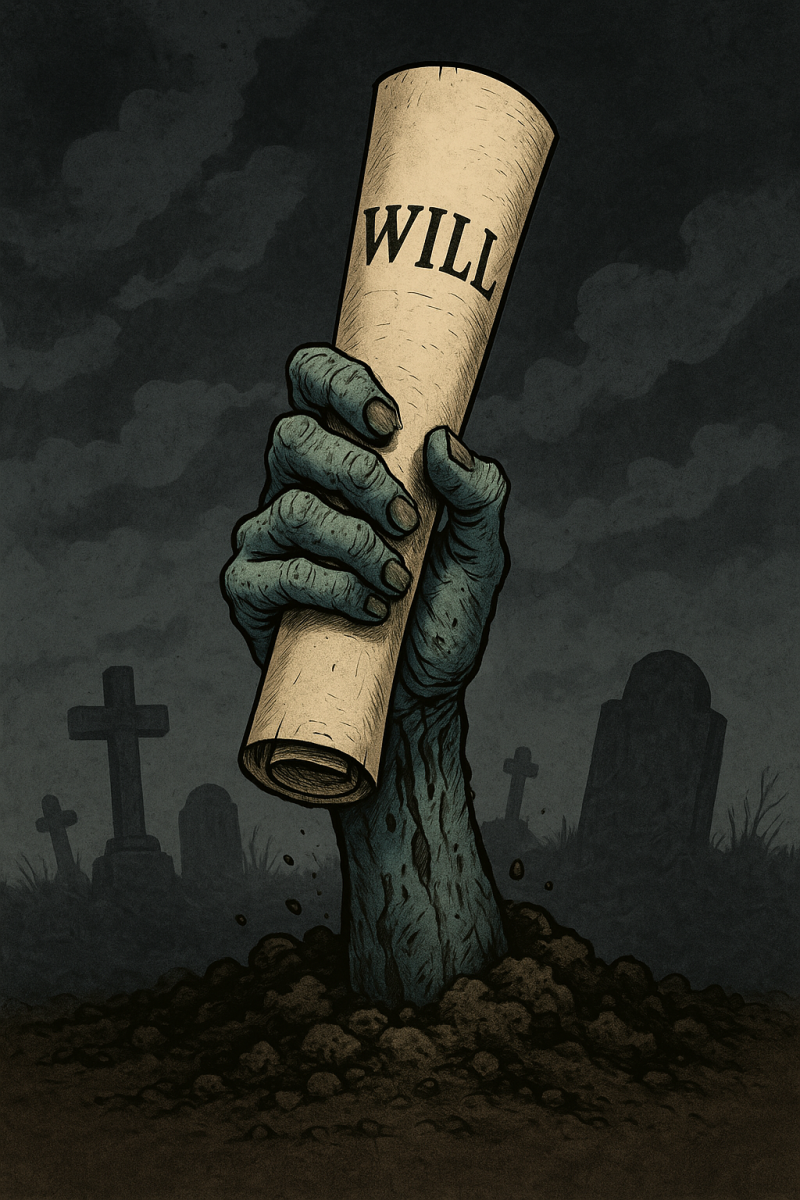
One that never left me was a phrase used by judges to describe overly controlling estate plans: “the dead hand of the past.” It’s a chilling image — and it should be.
What the “Dead Hand” Really Means
The phrase comes from the idea that someone, long gone, can still control the lives of their descendants through a will or trust full of restrictions.
You’ve probably seen this in movies or family stories:
- “You only inherit if you marry someone approved by the family.”
- “You can’t sell the land . . . ever.”
- “You must name your firstborn after Great-Aunt Gertrude to receive your share.”
That’s the “dead hand” at work — a plan that reaches out from the grave to manage people who never even met the person writing the rules.
The Rule Against Perpetuities
(a.k.a. Why Lawyers Need Aspirin)
To stop this kind of legal haunting, courts developed something called the rule against perpetuities. It’s one of the most confusing doctrines in all of property law — so confusing, in fact, that the California Supreme Court once remarked that it is not malpractice for a lawyer to misunderstand it. (And if you’ve ever heard a professor rant about “lives in being plus 21 years,” this is why.)
The basic idea is simple: You can’t tie up property forever.
Your will or trust can set conditions, but only for a limited time. Eventually, future generations get to make their own choices.
Florida’s Thousand-Year Ghost Clause
So how long is too long?
In Florida, lawmakers have tried to balance freedom and flexibility. Under current law, a trust can legally last up to 1,000 years. Yes, you read that right — a millennium.
That means the “dead hand of the past” can’t haunt for all eternity, but it can certainly linger.
That’s why modern estate planning in Florida has to balance two goals:
- Protecting assets for future generations, and
- Avoiding restrictions that cause future headaches (or lawsuits).
How We Keep the Past from Grabbing the Future
At Samaritan Law Group, we design wills and trusts that respect your wishes without shackling your heirs. We make sure your plan has enough structure to protect — but enough flexibility to adapt as laws, families, and life itself change.
That way, your legacy isn’t a ghost story — it’s a gift.
The Bottom Line
Your estate plan shouldn’t reach from the grave to control your family. It should guide them, protect them, but let them live freely.
If you want to make sure your will or trust isn’t haunted by, or invalidated by, the “dead hand of the past,” let’s talk.